


Clinically reviewed by Thusheinth Sivarajah, MScPT, Registered Physiotherapist · Last reviewed November 2026
A movement assessment is a physiotherapy check-up for how your body moves when nothing is badly hurt yet. A physiotherapist looks at your joint range, strength, balance and how you load each side, then gives you a short plan to fix small problems before they turn into injuries. Most people come away with 3 to 5 targeted exercises and a clear picture of where they stand.
Not sure who to see? Our team includes physiotherapists, chiropractors, registered massage therapists, a naturopathic doctor and psychotherapists. Learn more on our Where should I start? page, or book a free 20-minute consultation and we’ll match you with the right practitioner.
Key takeaways
- Movement health is your body’s ability to move well, freely and without compensating, today and for decades to come.
- Pain is usually the last signal. Stiffness, one-sided tightness and slower recovery tend to show up first.
- A physiotherapy movement assessment can spot these early signs and turn them into a simple plan.
- Small daily habits, like moving every hour and strength training twice a week, add up over time.
Why is “fine” not good enough?
You run, you lift, you get your steps in. By most measures you feel fine. But “fine” is a low bar for the body you’ll carry through every decade of your life.
Most of us wait for pain to tell us something is wrong. A tight hip becomes a sore back. A stiff shoulder becomes a skipped workout. By the time we pay attention, we’re already playing catch-up. At Art of Mobility, we think about it differently. We call it movement health, and it starts long before anything hurts.
What does movement health actually mean?
Movement health is your body’s ability to move well, freely and without compensation. It isn’t about how much you can lift or how fast you can run. It’s about the quality behind every movement you make.
Think of it as the foundation under your fitness. Strength, endurance and performance all sit on top of it. When the foundation is solid, everything above it gets easier. When it cracks, even simple things start to feel harder than they should. Good movement health means your joints move through their full range, your muscles share the load the way they’re meant to, and your body recovers well from what you ask of it.
What early warning signs should you look out for?
Pain is usually the last signal, not the first. Long before it shows up, your body sends quieter cues:
- Stiffness that lingers. You feel tight every morning, or it takes longer and longer to warm up.
- One side feels different. One hip, shoulder or ankle moves less freely than the other.
- Recovery is slowing down. Soreness that used to fade in a day now hangs around for three.
- You’re quietly avoiding things. You skip certain exercises, sit a certain way or favour one leg without thinking about it.
- Your progress has stalled. You’re training consistently but not getting stronger or faster.
None of these are emergencies. They’re invitations to get curious, and the best time to answer them is while they’re still small.
A common pattern we see is a recreational runner who feels “a bit tight” in one hip for months. During an assessment, the physiotherapist finds less hip rotation and weaker glute strength on that side. A few targeted exercises, done consistently, often restore the balance before the tightness turns into knee or back pain. You can read more about how one joint affects another in our post on the kinetic chain.
What happens in a physiotherapy movement assessment?
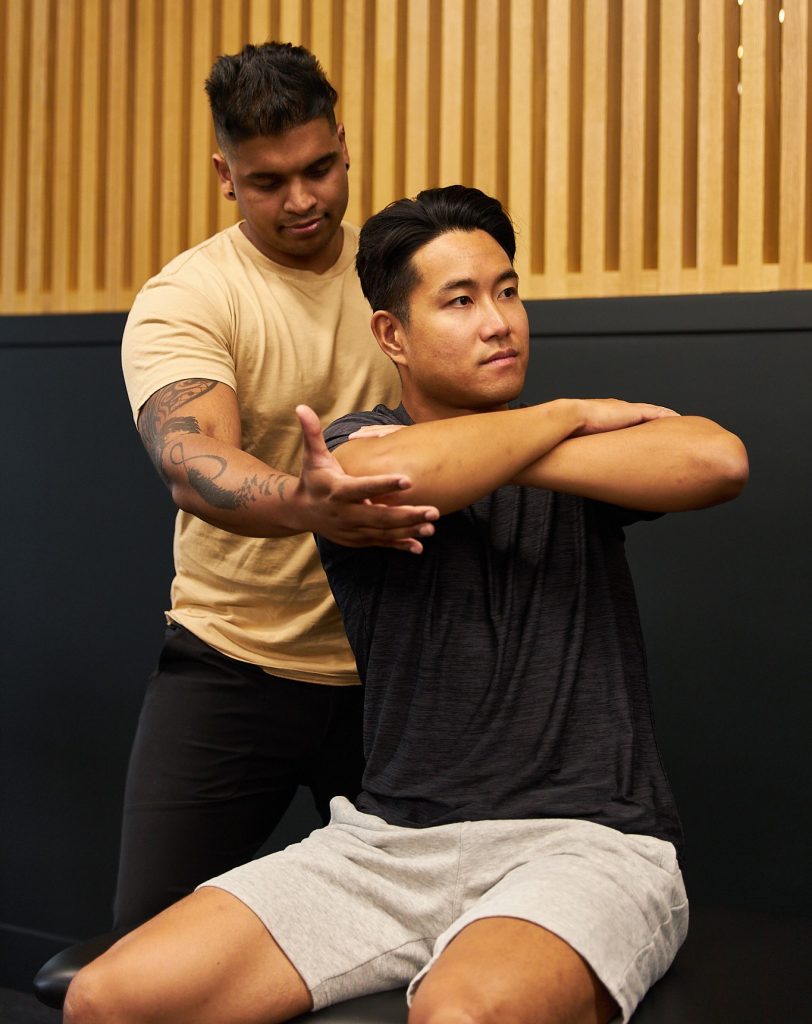
At AOM, a movement assessment is led by a registered physiotherapist and usually includes:
- A conversation about you: your activity, work, goals, past injuries and anything that feels off.
- Range of motion testing for your hips, spine, shoulders and ankles, comparing left and right.
- Strength and control checks such as single-leg balance, squats and hinging, to see how your body shares load.
- Movement screening of the activities you care about, like running, lifting or golf.
- A clear plan: a few targeted exercises, habits to change and how to progress them, with follow-ups if needed.
Some people add clinical Pilates or massage therapy to support their plan. Because our team works under one roof, it’s easy to coordinate.
How much movement do adults actually need?
The Canadian 24-Hour Movement Guidelines for Adults (CSEP) recommend at least 150 minutes of moderate to vigorous activity each week, muscle-strengthening activities at least twice a week, limiting sedentary time to 8 hours or less, and 7 to 9 hours of good-quality sleep. The World Health Organization’s physical activity fact sheet adds that any amount of activity is better than none, and that regular activity helps prevent and manage conditions such as heart disease and diabetes.
Movement health is what lets you keep meeting those targets year after year without getting hurt.
What small habits make the biggest difference?
- Move every hour. Stand, walk or stretch for a couple of minutes. Your joints love variety.
- Warm up with intention. Spend five minutes preparing the areas you’re about to use, not just your heart rate.
- Explore your full range. Take your hips, shoulders and spine through their full, comfortable range each day.
- Strength train twice a week. Strong muscles protect your joints and help you recover.
- Treat recovery as training. Sleep, hydration and rest days are where your body adapts.
- Check in with yourself. Once a week, notice what feels tight, weak or different. Patterns tell a story.
Consistency beats intensity. Small, daily care adds up to a body that keeps up with the life you want to live, for more healthy years.
When should you see a doctor instead?
A movement assessment is for people who feel generally well. See your family doctor or seek urgent care if you have chest pain or shortness of breath with activity, sudden severe pain or swelling after an injury, numbness or weakness that’s getting worse, unexplained weight loss, fever with joint or back pain, or new loss of bladder or bowel control.
Frequently asked questions
No. Physiotherapists help people move better at every stage, including before an injury. You also don’t need a doctor’s referral to book physiotherapy in Ontario.
An initial physiotherapy assessment is usually long enough to cover your history, testing and a starting plan. Our front desk can confirm the appointment length when you book.
It’s delivered by a registered physiotherapist, so it’s usually covered under the physiotherapy portion of extended health benefits. Coverage varies by plan, and we offer direct billing to most providers.
Many people check in every few months, or before a new training block, race or sport season. Your physiotherapist will suggest a timeline based on your goals.
Book a movement assessment in Mississauga or Toronto
You don’t have to be injured to deserve good care. You just have to want more than fine. Our physiotherapists in Port Credit, Mississauga and Trinity Bellwoods, Toronto can show you how you really move and where you could be. Not sure where to start? Book a free 20-minute consultation.
Written by Thusheinth Sivarajah, MScPT, Registered Physiotherapist and co-founder of Art of Mobility.
Last updated: October 22, 2026
Want help with this? Book with our team: physiotherapy in Port Credit, Mississauga or physiotherapy in Trinity Bellwoods, Toronto.