

Mississauga
Reviewed by Thusheinth Sivarajah, MScPT, Registered Physiotherapist · Last reviewed November 2026
Do you feel off-balance, light-headed or foggy when your neck is sore or stiff? Dizziness that seems to come from the neck is called cervicogenic dizziness. It often shows up after whiplash, a concussion or long periods of poor neck posture.
Because many conditions can cause dizziness, careful assessment comes first. Physiotherapists with vestibular training at our Mississauga and Toronto clinics check for other causes, then treat the neck and balance system together. You can book without a referral.
5.0 · 640+ Google reviewsNo referral needed
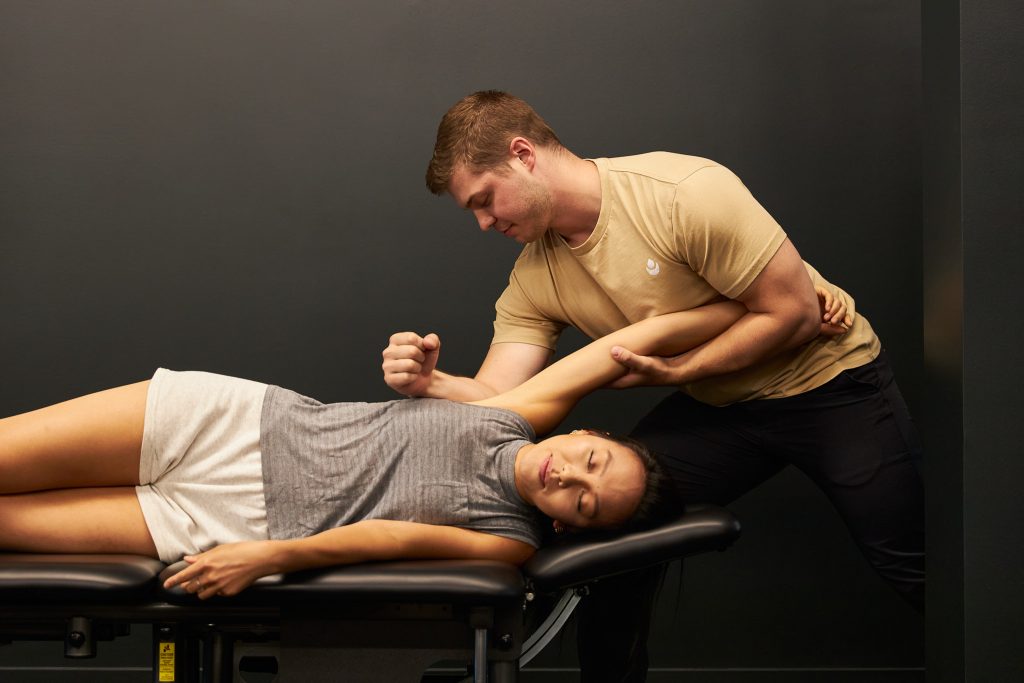
Your brain works out where you are in space using three main sources: your eyes, your inner ear and sensors in your muscles and joints, many of which sit in the upper neck. When the neck is injured, stiff or painful, those sensors can send confusing signals. The brain then struggles to match them with what your eyes and inner ears report, and you may feel dizzy or unsteady.
People with cervicogenic dizziness often describe:
It is often linked to whiplash, concussion or long-standing neck pain.
There is no single test that confirms cervicogenic dizziness. It is identified by ruling out other causes and finding a clear connection between the neck and the symptoms. That is why your first visit is thorough.
Your physiotherapist will screen for:
If anything suggests a non-neck cause, we will explain why and refer you to your family doctor or the right service. Some people have more than one cause at once, such as BPPV plus a stiff neck after a fall, and each part may need its own treatment.
Once serious causes have been screened out, your physio looks closely at your neck, eyes and balance. The assessment may include:
Your physiotherapist will put the findings together and explain how much of your dizziness seems to be coming from the neck. This guides how much of your plan focuses on the neck versus the inner ear and balance system. Learn more about our vestibular therapy services.
Art of Mobility is a clinic that cares about their clients. Dr. Colby (Chiro) has done wonders in helping me with a tough injury. His knowledge and expertise with treating my vertigo has helped me immensely on my path to recovery. …
I had an issue with my vestibular, which suddenly made me dizzy and walking difficult. I had my first appointment at another clinic, but then I found Dr. Mowni. He helped me find a way to feel better and taught me how to handle similar situations in the future. …
My consultation with Physiotherapist Nathan Wong at Art of Mobility (Mississauga office) for my vertigo. With patience & exercises I have regained my life to do everyday chores, without fear of any vertigo. I’m grateful for all the help & understanding.
Reviews are from our Google Business Profiles, shown with the reviewer’s initials. Individual results vary.
Free 20-minute consultation
Not sure where to start? Talk to our team for free.
Tell us what is going on and we will match you with the right practitioner. No obligation.
Treatment usually combines neck care with retraining your sense of balance and head position. Your plan may include:
Many people notice that their dizziness eases as neck pain settles. Exercises are kept short and frequent, and your physio will adjust them if they bring on too many symptoms.
Our dizziness and balance page covers other types of dizziness we treat.
Dizziness can make you avoid moving your head, driving or busy places. Unfortunately, avoiding movement can make symptoms last longer by keeping the neck stiff and the balance system out of practice. A gradual return to normal activities is part of recovery.
Tips that may help:
Persistent dizziness can be stressful and affect mood. If worry about symptoms is taking over, our registered psychotherapists can help, including through anxiety therapy.
If your neck is very tight, massage therapy may be added alongside physiotherapy.
Call 911 if dizziness comes on suddenly with any of these:
See your doctor if you have sudden hearing loss, ringing in one ear, or dizziness that keeps getting worse.
If your dizziness fits a neck-related pattern, you can book directly with a physiotherapist trained in vestibular rehab at our Mississauga or Toronto clinic. Not sure if your symptoms fit? A free 20-minute consultation can help you decide on next steps. We direct bill most extended health plans.
If you have had a recent car accident, please note that we don't handle motor vehicle accident claims, though you can still pay privately or use extended health benefits.
Vertigo usually means a spinning feeling, often from the inner ear. Cervicogenic dizziness is more often unsteadiness or light-headedness linked to neck pain or stiffness.
Yes. Dizziness is common after whiplash, and it can come from the neck, the inner ear or a concussion. Your physio will check all three.
Many people notice gradual change over several weeks, especially as neck pain eases. Your physiotherapist will review progress regularly.
Gentle mobilization is often used. High-velocity neck adjustments are not usually needed for this condition and are only considered after careful screening.
Usually not. Your physio will refer you to your doctor if your history or exam suggests imaging or another assessment is needed. Learn more on our vestibular therapy page.
Questions about your symptoms? Talk to our team in Mississauga or Toronto.
For more background, these organizations offer reliable, plain-language information. It is general information and does not replace advice from your own clinician.
Find your nearest location.
