

Mississauga
The infrapatellar fat pad sits just below the kneecap. When it becomes irritated and pinched between the kneecap and thigh bone, it causes sharp pain at the front of the knee, especially when straightening the leg fully or standing with knees locked. It's often mistaken for patellar tendon pain, and settles with offloading and targeted exercise.
5.0 · 640+ Google reviewsNo referral needed
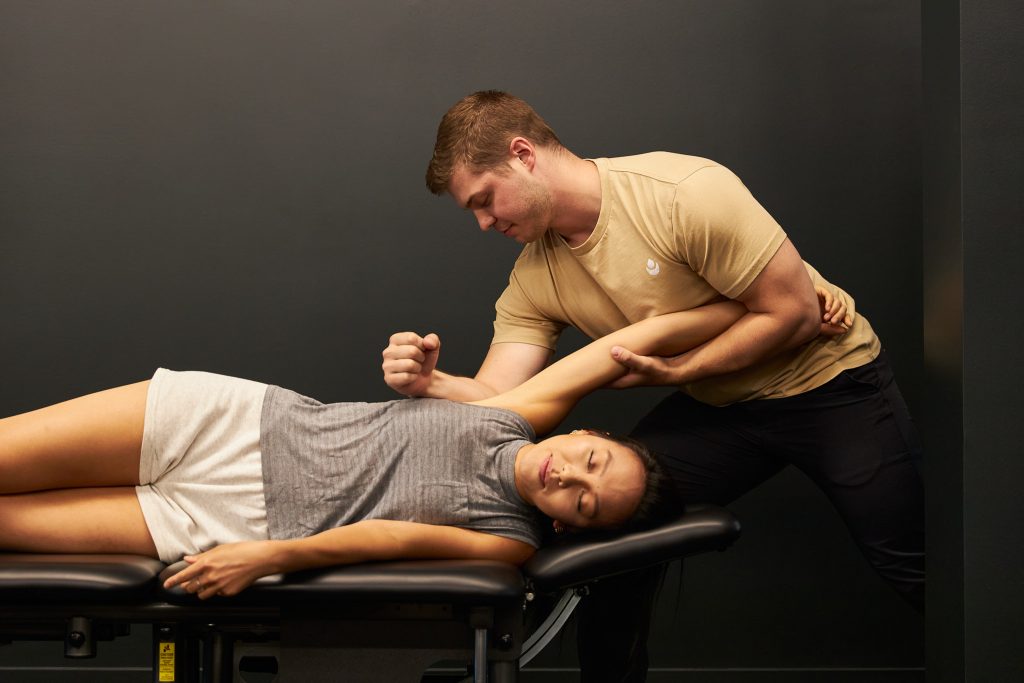
Most people improve over several weeks once the fat pad is offloaded.
See a doctor if:
Sources: Wikipedia: Infrapatellar fat pad. This information is general and does not replace an assessment with a clinician.
Symptoms vary from person to person, but common signs include:
Common causes and risk factors include:
Free 20-minute consultation
Not sure where to start? Talk to our team for free.
Tell us what is going on and we will match you with the right practitioner. No obligation.
Art of Mobility has clinics in Port Credit, Mississauga and Trinity Bellwoods, Toronto. Your first visit starts with a full assessment and a plan built around your goals.
Who treats this at Art of Mobility
Physiotherapists in Port Credit, Mississauga: Thusheinth Sivarajah, Justin Achat, Chung Duong, Tharaniya Sivarajah and Nathan Wong. In Trinity Bellwoods, Toronto: Justin Mah, Yunqi and Nathan Wong.
No referral needed. Meet the full team.
How long does it take? Most cases settle in 4 to 8 weeks with taping, load changes and strengthening.
Seek urgent medical care if you notice:
Fat Pad Syndrome rarely has a single cause, so our clinicians work together on one plan rather than treating it in isolation. Depending on what your assessment shows, your care may combine:
Everyone works from one shared chart at our Port Credit and Trinity Bellwoods clinics, so you only tell your story once. Not sure who to see first? Book a free 20-minute consultation and we will match you with the right clinician.
Both conditions cause pain at the front of the knee, just below the kneecap, so they are easy to mix up.
A third condition, patellofemoral pain syndrome, causes pain around or behind the kneecap. Your physiotherapist will use touch, movement and loading tests to tell these apart, since the treatment plan for each is a little different. See our knee pain page for more.
The fat pad is very sensitive, so the main goal early on is to calm it down and avoid repeated pinching.
If your knee becomes very swollen, hot or locks in place, see your doctor. Sports physiotherapy can help you plan a safe return to training.
Most cases settle in 4 to 8 weeks with taping, load changes and strengthening.
Usually not.
Yes, avoiding positions that push the knee into full extension while it settles.
No referral is needed to book with us. Treatment is covered by most extended health plans, and we direct bill most insurers.
Standing with your knees locked, wearing high heels and activities that force the knee into full straightening often aggravate the fat pad. Direct pressure, such as kneeling, can also be uncomfortable.
For many people, taping can help offload the fat pad and reduce pain in the short term. It works well alongside exercise and changes to daily habits.
Usually not. Fat pad irritation often settles over several weeks with load management and exercise, although it can take longer if the area keeps getting aggravated.
Questions about your symptoms? Talk to our team in Mississauga or Toronto.
For more background, these organizations offer reliable, plain-language information. It is general information and does not replace advice from your own clinician.
Find your nearest location.
