
Mississauga
A sports hernia is a strain or tear of the soft tissues in the lower abdomen or groin, common in sports with sudden direction changes and twisting, like hockey and soccer. Pain eases with rest but returns with sport. Physiotherapy for abdominal and inner-thigh strength and flexibility often resolves pain within 4 to 6 weeks.
5.0 · 640+ Google reviewsNo referral needed
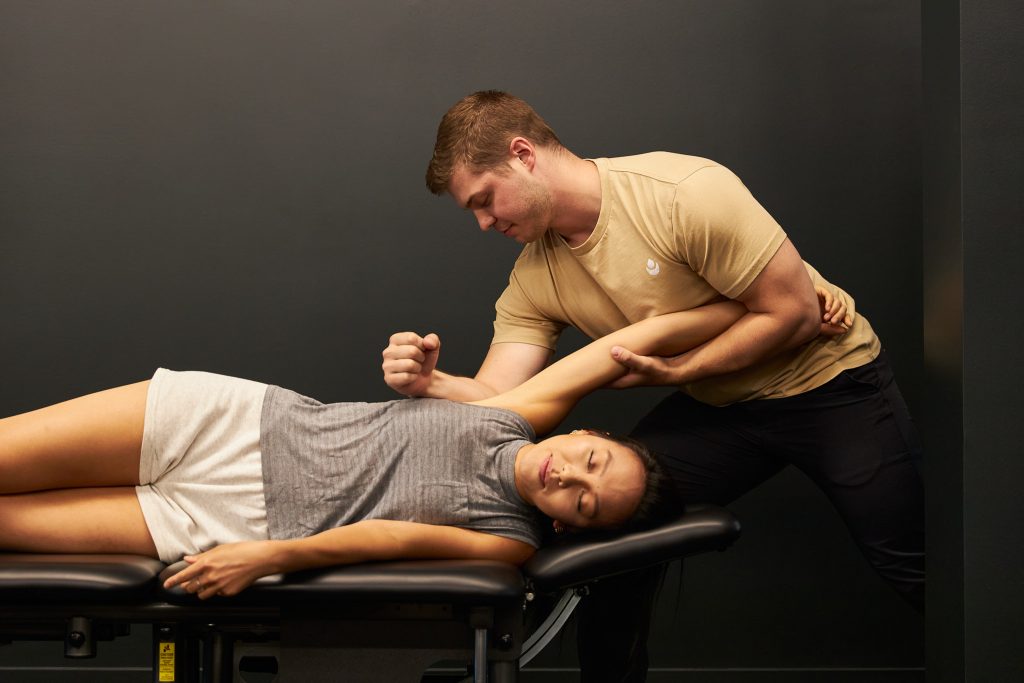
Often 4 to 6 weeks of physiotherapy resolves pain and allows return to sport; if pain keeps returning, a surgical opinion may be needed.
See a doctor urgently if:
Sources: OrthoInfo (AAOS): Sports hernia (athletic pubalgia). This information is general and does not replace an assessment with a clinician.
Symptoms vary from person to person, but common signs include:
Common causes and risk factors include:
Free 20-minute consultation
Not sure where to start? Talk to our team for free.
Tell us what is going on and we will match you with the right practitioner. No obligation.
Art of Mobility has clinics in Port Credit, Mississauga and Trinity Bellwoods, Toronto. Your first visit starts with a full assessment and a plan built around your goals.
Who treats this at Art of Mobility
Physiotherapists in Port Credit, Mississauga: Thusheinth Sivarajah, Justin Achat, Chung Duong, Tharaniya Sivarajah and Nathan Wong. In Trinity Bellwoods, Toronto: Justin Mah, Yunqi and Nathan Wong.
No referral needed. Meet the full team.
How long does it take? Many athletes improve in 6 to 12 weeks with rehab; some need a surgical opinion.
Seek urgent medical care if you notice:
Sports Hernia rarely has a single cause, so our clinicians work together on one plan rather than treating it in isolation. Depending on what your assessment shows, your care may combine:
Everyone works from one shared chart at our Port Credit and Trinity Bellwoods clinics, so you only tell your story once. Not sure who to see first? Book a free 20-minute consultation and we will match you with the right clinician.
Despite the name, a sports hernia is usually not a true hernia.
Athletic pubalgia is also different from a groin pull, which is a strain of the inner thigh muscles. Your physiotherapist will ask about your sport and test your hip, abdominal and groin strength to help tell these apart. If you notice a bulge, or severe pain with nausea or vomiting, see a doctor right away.
Athletic pubalgia often comes back if athletes return too quickly. A step-by-step plan can help you get back to play with more confidence.
Your physiotherapist will use strength tests and your symptoms to guide each step. Sports physiotherapy and personal training can help bridge the gap from rehab to competition. Read more on our sports injury treatment page.
Many athletes improve in 6 to 12 weeks with rehab; some need a surgical opinion.
MRI may be used.
Yes, with modified sport while you strengthen.
No referral is needed to book with us. Treatment is covered by most extended health plans, and we direct bill most insurers.
Many people improve with a structured rehab program focused on hip and core strength. If symptoms persist after several months of good rehab, your doctor may discuss other options.
Yes, physiotherapy is often the first line of care for athletic pubalgia. It focuses on reducing pain, rebuilding strength and planning a gradual return to sport.
Early on, it helps to limit sprinting, kicking, quick cuts and full sit-ups, which load the injured area. Your physiotherapist will help you reintroduce these step by step.
Questions about your symptoms? Talk to our team in Mississauga or Toronto.
For more background, these organizations offer reliable, plain-language information. It is general information and does not replace advice from your own clinician.
Find your nearest location.
