

Mississauga
Snapping scapula syndrome causes grinding, popping or snapping as the shoulder blade moves over the ribs, sometimes with pain. It's most common in young, active people who repeatedly raise their arms overhead or throw. Treatment usually starts without surgery, with physiotherapy to improve shoulder-blade control and strength.
5.0 · 640+ Google reviewsNo referral needed
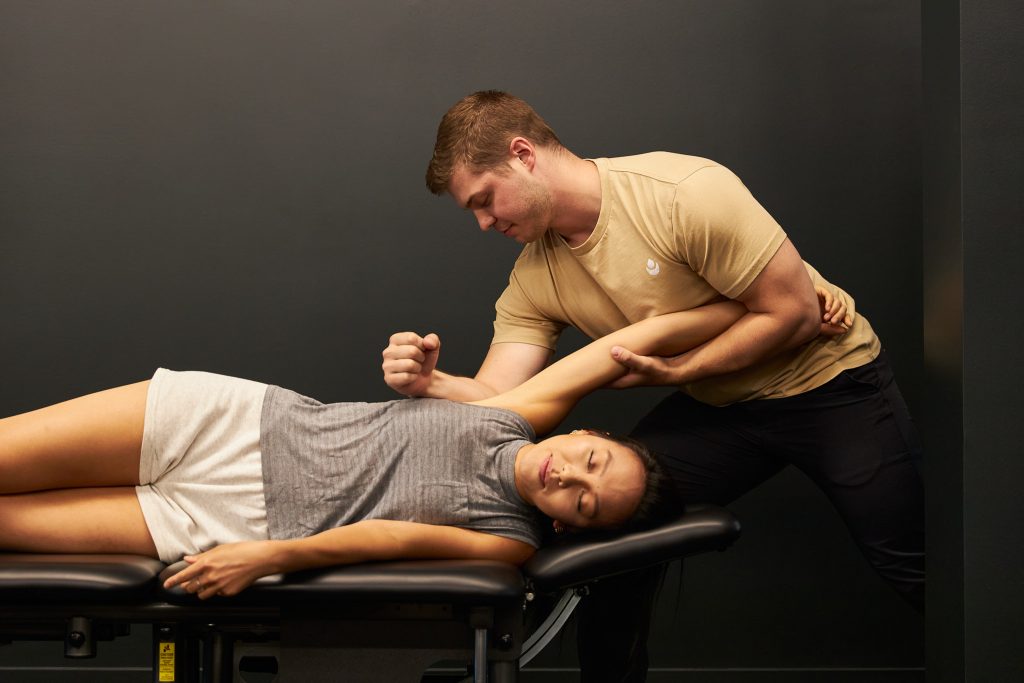
Most people improve with several weeks to a few months of targeted exercise.
See a doctor if:
Sources: Wikipedia: Snapping scapula syndrome. This information is general and does not replace an assessment with a clinician.
Symptoms vary from person to person, but common signs include:
Common causes and risk factors include:
Free 20-minute consultation
Not sure where to start? Talk to our team for free.
Tell us what is going on and we will match you with the right practitioner. No obligation.
Art of Mobility has clinics in Port Credit, Mississauga and Trinity Bellwoods, Toronto. Your first visit starts with a full assessment and a plan built around your goals.
Who treats this at Art of Mobility
Physiotherapists in Port Credit, Mississauga: Thusheinth Sivarajah, Justin Achat, Chung Duong, Tharaniya Sivarajah and Nathan Wong. In Trinity Bellwoods, Toronto: Justin Mah, Yunqi and Nathan Wong.
No referral needed. Meet the full team.
How long does it take? Most people improve within 6 to 12 weeks of targeted rehab.
Seek urgent medical care if you notice:
Snapping Scapula rarely has a single cause, so our clinicians work together on one plan rather than treating it in isolation. Depending on what your assessment shows, your care may combine:
Everyone works from one shared chart at our Port Credit and Trinity Bellwoods clinics, so you only tell your story once. Not sure who to see first? Book a free 20-minute consultation and we will match you with the right clinician.
Snapping scapula syndrome happens when the shoulder blade does not glide smoothly over the ribcage, causing clicking, grinding or popping, sometimes with pain. It is more common in some groups:
Many people have painless clicking that needs no treatment. If it hurts, limits your activity or keeps getting worse, an assessment can help. Learn more about shoulder pain and sports physiotherapy.
Treatment usually focuses on improving how the shoulder blade moves and how well its muscles control it. Your physiotherapist will tailor exercises to you, but common ones include:
Hands-on care such as massage therapy or dry needling may also help ease tight muscles around the shoulder blade so you can move more comfortably while you build strength.
Most people improve within 6 to 12 weeks of targeted rehab.
Usually not.
Yes, with shoulder blade strengthening.
No referral is needed to book with us. Treatment is covered by most extended health plans, and we direct bill most insurers.
Usually not. Many people have painless clicking that is harmless, but if it is painful, getting worse or comes with swelling, it is worth having it assessed.
Posture can play a role, especially rounded shoulders and a stiff upper back, which can change how the shoulder blade glides. Improving strength and mobility often helps more than trying to hold one "perfect" posture.
Massage may help ease tight muscles around the shoulder blade and reduce discomfort. It tends to work well alongside strengthening exercises rather than on its own.
Questions about your symptoms? Talk to our team in Mississauga or Toronto.
For more background, these organizations offer reliable, plain-language information. It is general information and does not replace advice from your own clinician.
Find your nearest location.
