
Mississauga
Reviewed by Thusheinth Sivarajah, MScPT, Registered Physiotherapist · Last reviewed November 2026
Shoulder replacement surgery can ease pain from severe arthritis or a damaged rotator cuff, but the surgery is only half the story. Rehab plays a big role in how well your new shoulder moves and how strong it becomes.
Our physiotherapists in Port Credit and downtown Toronto support you before surgery and through each phase afterward, always following your surgeon's protocol. No referral is needed to book, though we will ask for your surgical notes.
5.0 · 640+ Google reviewsNo referral needed
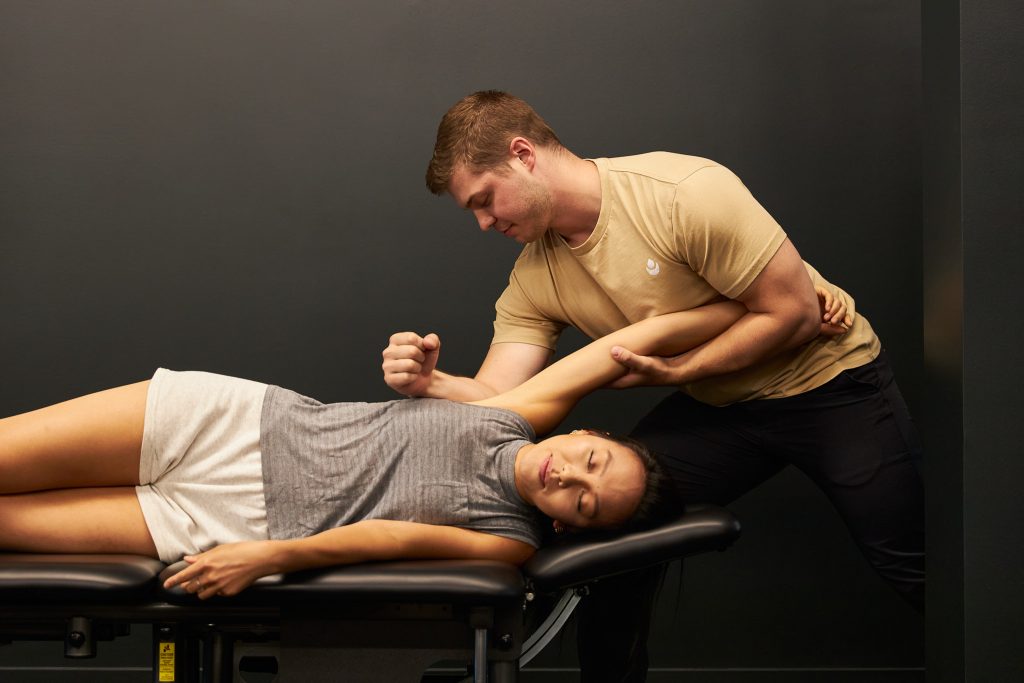
There are two main types of shoulder replacement, and the difference affects your rehab:
People often have shoulder replacement for severe shoulder osteoarthritis, large rotator cuff tears with arthritis, or some complex fractures. Your surgeon will choose the type that suits your shoulder, and your physiotherapist will tailor rehab to match.
If you have time before your surgery date, a few weeks of prehab can make recovery easier. Prehab may include:
Knowing what to expect can also lower anxiety. Your physio will walk you through the phases ahead so the process feels less overwhelming. Our pre- and post-surgical rehabilitation page explains how we support people around many types of surgery.
In the early weeks, the goal is to protect healing tissue and manage pain while keeping the shoulder from getting too stiff. Timelines vary by surgeon, so your protocol always comes first. This phase often includes:
Common precautions include:
No lifting with the operated arm in this phase unless your surgeon says otherwise.
Free 20-minute consultation
Not sure where to start? Talk to our team for free.
Tell us what is going on and we will match you with the right practitioner. No obligation.
Once your surgeon clears you to come out of the sling, usually around four to six weeks, rehab shifts toward getting the shoulder moving on its own.
Phase 2 (about weeks 6 to 12):
Phase 3 (about week 12 onward):
Many people keep improving for up to a year. With a reverse replacement, overhead reach often returns well, but reaching behind your back may stay limited. Your physiotherapist will give you realistic expectations based on your surgery, starting point and goals.
If you have other shoulder concerns, our shoulder pain page covers the wider picture.
Most people want to get back to things like golf, swimming, gardening, playing with grandkids or lifting at the gym. Many lower-impact activities are possible after shoulder replacement, but your surgeon may have long-term limits, such as avoiding heavy overhead lifting or contact sports.
Your physiotherapist will help you:
Golfers can also book a golf assessment with our team once the surgeon approves a return to swinging. Massage therapy can help with neck and upper back tension that often builds up while the arm has been protected.
Staying active after rehab ends helps protect your results over the long term.
Contact your surgeon promptly if you notice:
Call 911 for chest pain or shortness of breath, and see a doctor urgently for a painful, swollen arm or calf, which can be a sign of a blood clot.
To book, call either clinic or use our online booking. Bring your surgeon's protocol and any operative notes to your first visit. You don't need a referral, though some insurance plans ask for one for claims, so check your policy. We direct bill most extended health plans.
Have questions about timing or what to expect? Book a free 20-minute consultation, in person or virtual.
Many people start within the first one to two weeks, depending on their surgeon's instructions. Some hospitals provide early exercises before you see an outpatient physio.
Formal rehab often lasts three to six months, and many people keep improving for up to a year.
Reverse replacement rehab focuses on deltoid strength and protecting against dislocation, especially avoiding reaching behind your back early on. Your surgeon's protocol sets the exact limits.
Most people sleep propped up or in a recliner early on. Ask your surgeon when side-sleeping is allowed.
Yes, always. Bring your protocol to your first visit, and we will contact your surgeon's office if anything is unclear. See our surgical rehab page for more.
Questions about your symptoms? Talk to our team in Mississauga or Toronto.
For more background, these organizations offer reliable, plain-language information. It is general information and does not replace advice from your own clinician.
Find your nearest location.