
Mississauga
Your shoulder is tight, your lower back aches after long days at the desk, and your benefits cover both massage and physio. So which do you book?
Registered massage therapists (RMTs) and physiotherapists both work with muscles, joints and pain, but they approach problems from different angles. Often the answer is not one or the other, but which to start with and how to combine them. This guide explains what each profession does, when each tends to help, and how working with both under one roof at Art of Mobility can keep things simple.
5.0 · 640+ Google reviewsNo referral needed
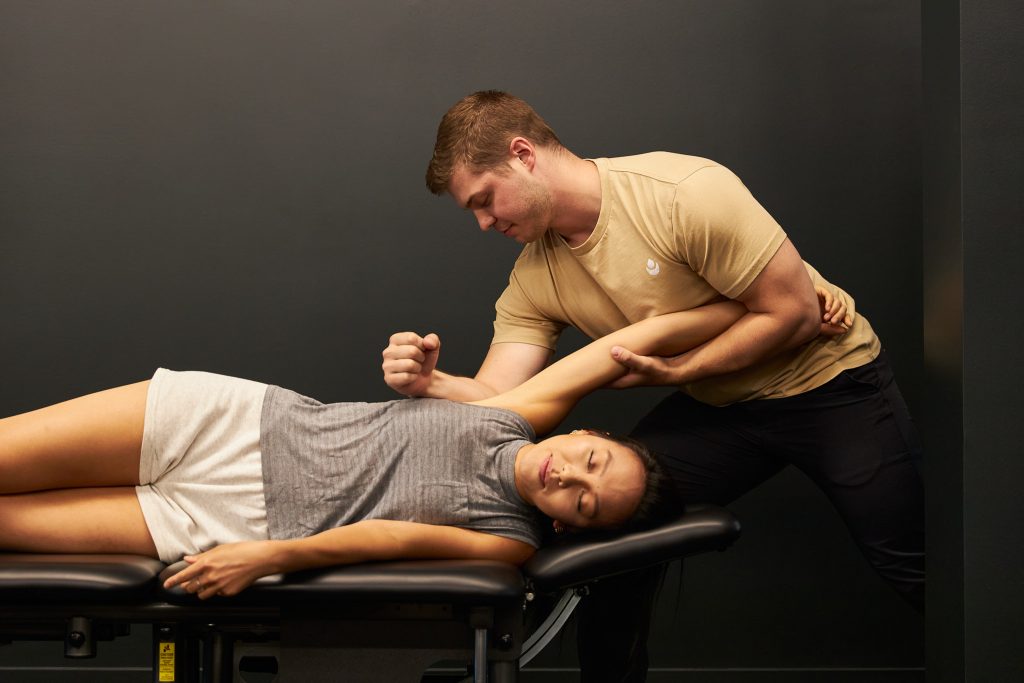
RMTs in Ontario are regulated by the College of Massage Therapists of Ontario (CMTO). They complete a diploma program that includes anatomy, physiology, pathology and many hours of supervised hands-on practice, and they must pass provincial exams before registering.
Massage therapy focuses on the soft tissues: muscles, tendons, fascia and the connective tissue around joints. An RMT uses hands-on techniques to ease tension, reduce discomfort, improve circulation and help your nervous system settle. Sessions can be gentle and relaxing or firm and targeted, depending on your goals.
Common reasons people see an RMT include muscle tightness from stress or desk work, recovery after training, tension headaches, pregnancy-related aches and general relaxation. Many RMTs also give simple stretches or self-care ideas to try at home.
At Art of Mobility, we offer several styles, including deep tissue, sports massage, prenatal and Swedish relaxation massage. Explore our massage therapy page.
Physiotherapists are regulated by the College of Physiotherapists of Ontario (CPO) and complete a master's degree in physical therapy. Their training covers the musculoskeletal system, the nervous system, the heart and lungs, and rehabilitation after injury or surgery.
A physio starts with a detailed assessment. They ask how the problem started, test strength, range of motion and nerve function, and watch how you move. From there, they form a working impression and build a plan with you.
Treatment usually blends several tools:
Physiotherapy is often a good fit for sprains, sports injuries, post-surgical rehab, dizziness, concussion, pelvic health concerns and pain that keeps coming back. A physio's main goal is to help you understand the problem and give you a plan you can carry forward on your own. Learn more on our physiotherapy page.
Both professions are regulated, both use their hands and both care about how you feel. Here is where they tend to differ:
Neither replaces the other. They solve different parts of the puzzle, and the right starting point depends on what is going on and what you prefer.
Free 20-minute consultation
Not sure where to start? Talk to our team for free.
Tell us what is going on and we will recommend the right clinician and plan for you. No obligation.
Massage therapy is often a good first step when the main issue is tension, tightness or stress rather than a clear injury. For example:
Regular massage can be part of a healthy routine, even when nothing is "wrong." Many people book every few weeks to manage the physical side of stress.
If your symptoms do not ease after a few massage visits, keep returning, or come with weakness, numbness or trouble moving, that is a sign a physio assessment may help. Your RMT can suggest this, and at our clinic they can pass along notes, with your consent, so you do not have to start your story over.
Read more about tension headaches and how we approach them.
A physio is often the better first stop when there is a specific injury, a change in how you move, or symptoms that need a closer look. Consider physio when you have:
Some signs call for a doctor or emergency department before any therapy: sudden weakness, numbness around the groin, trouble controlling your bladder or bowels, chest pain, or being unable to stand on a leg after a fall. These need medical attention first.
For pain that has stuck around, our chronic pain management page explains how physio and other services can work together.
Many people get the most from combining the two. A common pattern looks like this: physio sessions focus on assessment, exercise and building capacity, while massage sessions help manage tension and make it easier to keep up with your program.
At Art of Mobility, physiotherapists and RMTs work in the same clinics in Port Credit, Mississauga, and Trinity Bellwoods, Toronto. With your consent, they can share notes and line up their approach, which saves you from repeating yourself.
A few practical tips:
Still not sure where to start? Our which therapy is right for me guide can help, or book a free 20-minute consultation and we will talk it through with you.
It depends on the cause. Muscle tension may respond well to massage, while back pain with leg symptoms, weakness or repeated flare-ups often benefits from a physio assessment. Many people use both.
Yes. Many people do, and it can work well when the two practitioners are working toward the same goal.
No referral is needed in Ontario for either one. Some benefit plans ask for a doctor's note to reimburse massage, so check your plan.
Physios may use hands-on soft tissue work, but it is usually a smaller part of the visit. Exercise and education tend to take up more of the session.
Most plans list physiotherapy and massage therapy as separate benefits, each with its own limit. Check your booklet or member portal for the details.
Questions about your symptoms? Talk to our team in Mississauga or Toronto.
Find your nearest location.