

Mississauga
That tender, tight spot under your shoulder blade or along your spine that you keep pressing on? Most people call it a knot.
Muscle knots in the back are very common, and they are usually more annoying than serious. This page explains what knots are, simple ways to ease them at home and when it may help to see a registered massage therapist (RMT) or physiotherapist at Art of Mobility in Port Credit (Mississauga) or Trinity Bellwoods (Toronto). It also covers the warning signs that mean you should see a doctor instead.
5.0 · 640+ Google reviewsNo referral needed
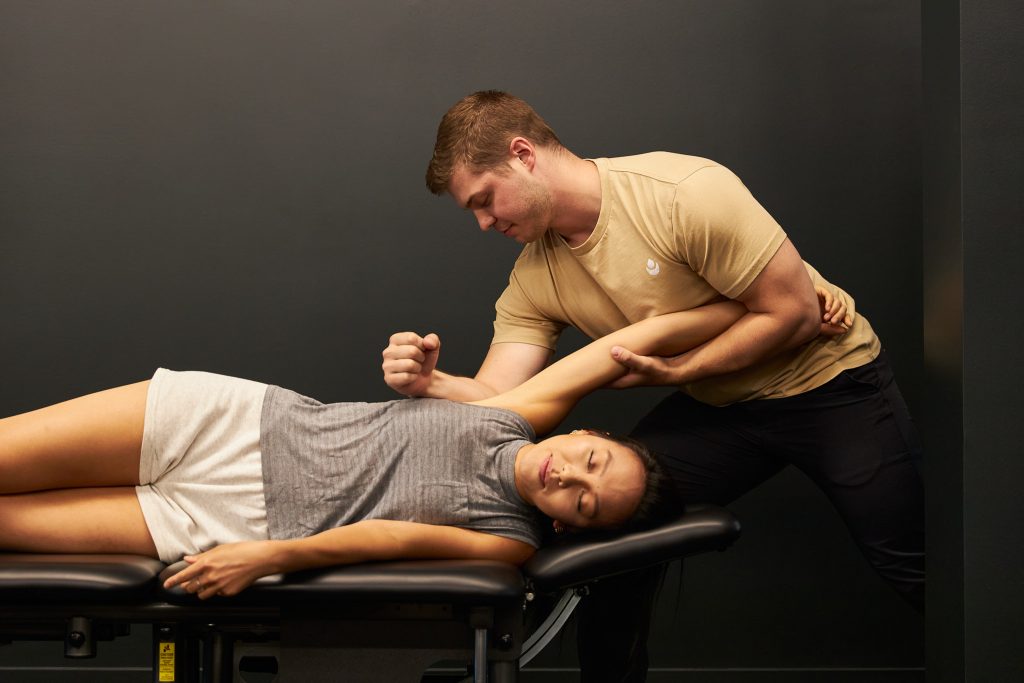
"Knot" is an everyday word, not a medical one. Clinicians often use the term myofascial trigger point to describe a small, tender spot in a tight band of muscle. Pressing on it may feel sore in that spot or send an ache to a nearby area, such as from the upper shoulder up into the neck.
Researchers still debate exactly what is happening in the tissue. Current thinking suggests a mix of muscle tension, irritated or sensitive tissue and the nervous system turning up the volume on signals from that area. The muscle is not literally tied in a knot, and it is not a sign of damage.
Knots in the back often show up:
They can come and go, and many people notice they flare during busy, stressful weeks or after a change in activity.
There is rarely one single cause. Knots often build up from a combination of everyday factors:
Knots can also show up alongside other issues, such as neck pain, tension headaches or back pain more generally. Thinking about your own triggers can help you choose which habits to change first.
Many knots ease with simple self-care. Try a few of these and see what works for you:
Pressure should feel like a "good hurt," not sharp pain. If self-massage makes symptoms worse or causes numbness, stop.
Free 20-minute consultation
Not sure where to start? Talk to our team for free.
Tell us what is going on and we will recommend the right clinician and plan for you. No obligation.
It may be worth booking a visit if:
A registered massage therapist can work on tight muscles in your back, shoulders and neck, help you relax and suggest stretches. Options such as deep tissue massage may suit people who prefer firmer pressure.
A physiotherapist will assess how you move, look for things that may be keeping the knot going and build an exercise plan to strengthen and condition the area. They can also use hands-on techniques.
Many people find a combination helpful. If you are not sure which to choose, read our comparison of an RMT vs a physiotherapist. You can book without a doctor's note, and our team can bill many insurers directly.
If a knot is stubborn, your clinician may suggest a more targeted approach.
Research on both approaches shows they may help reduce pain in the short term for some people, especially when combined with exercise and movement. They are tools within a plan, not a quick fix on their own.
Your clinician will screen your health history first. Tell them if you are pregnant, take blood thinners, have a bleeding disorder or feel uneasy about needles, so they can choose the right option.
A muscle knot should not come with signs of illness or nerve trouble. Get medical care soon, through your family doctor, a walk-in clinic or the ER, when back pain arrives with:
Call 911 for upper back or shoulder blade pain that comes with chest pain, shortness of breath, sweating, nausea or pain spreading to the jaw or arm. These can be signs of a heart problem.
If none of these apply and you would like help with a knot that will not let go, book a free 20-minute consultation at either clinic.
The tender spots are real, though the muscle is not literally tied in a knot. Clinicians often call them trigger points, and they usually reflect tense, sensitive tissue rather than damage.
Heat is usually more comfortable for tight, achy muscles. Ice may feel better after a fresh strain or if the area is swollen.
Many ease within a few days to a couple of weeks with self-care and movement. If one lasts longer or keeps coming back, consider getting it assessed.
Yes, gentle ball pressure on the muscles is fine for most people. Keep the ball off your spine and stop if you feel sharp pain or numbness.
Both can help, in different ways. See our RMT vs physiotherapist guide to decide where to start.
Questions about your symptoms? Talk to our team in Mississauga or Toronto.
Find your nearest location.
