

Mississauga
The facet joints are small joints at the back of the spine. When they become irritated or worn, they can cause back or neck pain, often worse with arching backward, twisting or standing for long periods. Facet joint pain is a common cause of low back pain, and treatment usually starts with physiotherapy and pain relief.
5.0 · 640+ Google reviewsNo referral needed
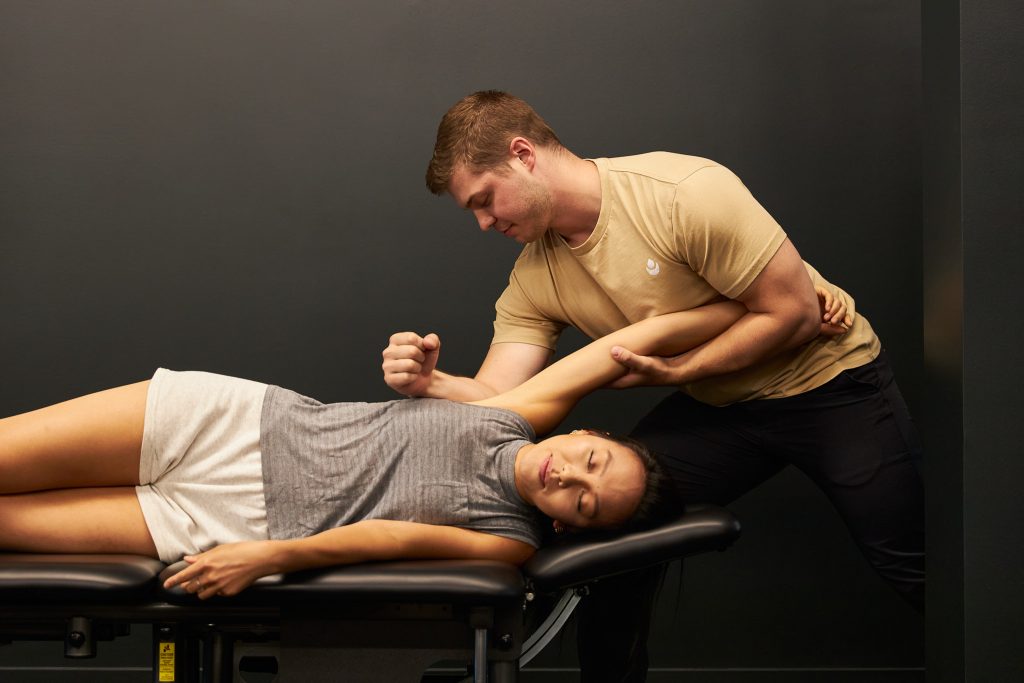
Many people improve over several weeks of treatment and exercise.
Get urgent help if back pain comes with:
Sources: Wikipedia: Facet syndrome. This information is general and does not replace an assessment with a clinician.
Symptoms vary from person to person, but common signs include:
Common causes and risk factors include:
Free 20-minute consultation
Not sure where to start? Talk to our team for free.
Tell us what is going on and we will match you with the right practitioner. No obligation.
Art of Mobility has clinics in Port Credit, Mississauga and Trinity Bellwoods, Toronto. Your first visit starts with a full assessment and a plan built around your goals.
Who treats this at Art of Mobility
Physiotherapists in Port Credit, Mississauga: Thusheinth Sivarajah, Justin Achat, Chung Duong, Tharaniya Sivarajah and Nathan Wong. In Trinity Bellwoods, Toronto: Justin Mah, Yunqi and Nathan Wong.
Chiropractors at both clinics: Dr. Colby Ng, Dr. Mownigan Naganathan and Dr. Rebekah Choi.
No referral needed. Meet the full team.
How long does it take? Most flare-ups settle within 4 to 8 weeks.
Seek urgent medical care if you notice:
Facet Joint Pain rarely has a single cause, so our clinicians work together on one plan rather than treating it in isolation. Depending on what your assessment shows, your care may combine:
Everyone works from one shared chart at our Port Credit and Trinity Bellwoods clinics, so you only tell your story once. Not sure who to see first? Book a free 20-minute consultation and we will match you with the right clinician.
Facet joints are small joints at the back of each spinal segment. Discs sit between the vertebrae at the front. Both can cause back or neck pain, but they often behave a little differently.
In real life, these patterns overlap, and many people have more than one source of pain. Your physiotherapist uses movement testing to understand what aggravates and eases your symptoms, then builds a plan around that. Learn more about chronic low back pain or neck pain.
Day-to-day habits can make a big difference in how your back or neck feels.
Seek urgent medical care if back pain comes with loss of bladder or bowel control, numbness in the groin, or new leg weakness.
Most flare-ups settle within 4 to 8 weeks.
Usually not.
Yes, with modified extension and twisting.
No referral is needed to book with us. Treatment is covered by most extended health plans, and we direct bill most insurers.
Yes, physiotherapy is a common first step for facet joint pain. Treatment may include hands-on care, mobility exercises and strengthening to help the spine handle daily load.
Not usually. Many people have flare-ups that settle with movement and exercise, and learning what triggers your pain can help reduce how often it returns.
Many people are more comfortable lying on their side with a pillow between their knees, or on their back with a pillow under their knees. Sleeping on your stomach can increase arching in the low back and may aggravate symptoms.
Questions about your symptoms? Talk to our team in Mississauga or Toronto.
See all conditions we treat.
For more background, these organizations offer reliable, plain-language information. It is general information and does not replace advice from your own clinician.
Find your nearest location.
