
Mississauga
Reviewed by Dr. Colby Ng, Chiropractor · All our chiropractors are registered with the College of Chiropractors of Ontario · Last reviewed November 2026
Whether you play hockey, run the waterfront trail, lift at the gym or play weekend pickleball, injuries can stall your progress. Chiropractors look at how your joints, muscles and movement patterns work together, and help you recover and return to sport.
Art of Mobility has chiropractors, physiotherapists and massage therapists in Port Credit, Mississauga and Trinity Bellwoods, Toronto. You can book without a referral, and we direct bill most extended health plans.
5.0 · 640+ Google reviewsNo referral needed
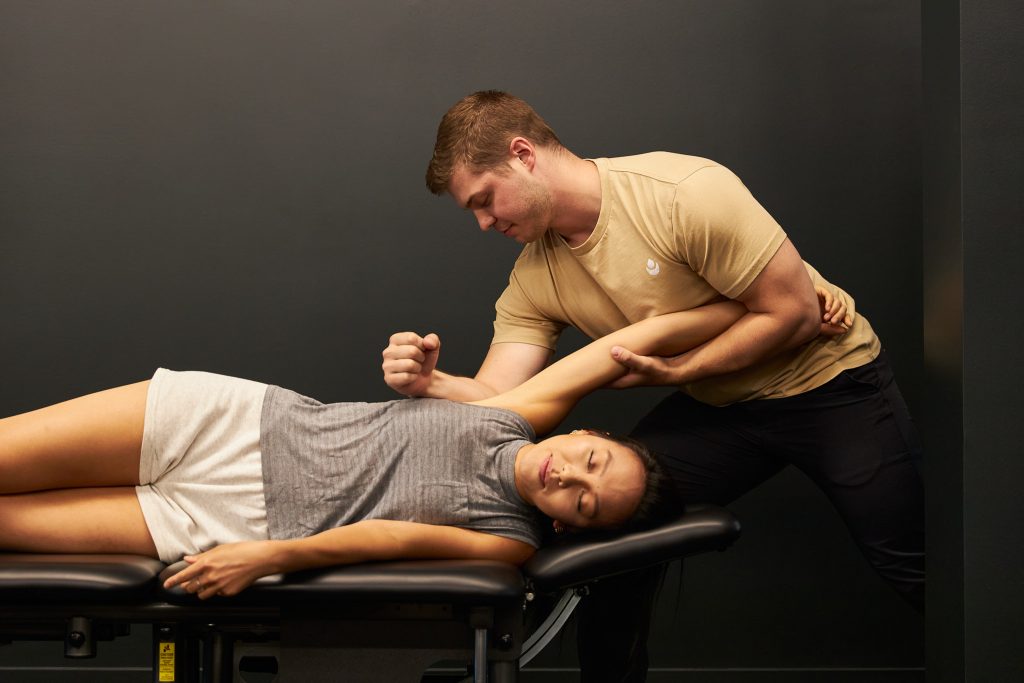
Chiropractors treat many injuries involving the spine and the joints and muscles of the arms and legs. Common examples include:
For a wider look at how our whole team handles sport-related injuries, see the sports injury treatment page. Athletes training at a high level may also want to read about how we support competitive athletes.
Some injuries happen in a single moment, like a rolled ankle or a pulled hamstring. Others build slowly from training load, such as low back pain in lifters or rib pain in rowers. Both types respond well to a clear diagnosis and a plan that matches your sport and season.
Your chiropractor starts with how the injury happened, your sport, training load, upcoming competitions and any past injuries. The exam then looks at both the injured area and the rest of the chain:
From there, you get a working diagnosis, a sense of how long recovery may take, and what training you can keep doing in the meantime. Staying as active as possible while you heal is usually part of the plan.
Bring your training log, footwear or any braces you use so your chiropractor can see the full picture.
Your plan blends hands-on work with progressive exercise. It may include:
Recovery is rarely a straight line. Your chiropractor will adjust the plan based on how your body responds to training and treatment from week to week.
Your chiropractor will also look at sleep, nutrition and recovery habits that affect healing. If fuelling is a concern, our nutrition coaching team can help you plan meals around training. Small changes in recovery often make rehab more productive.
Free 20-minute consultation
Not sure where to start? Talk to our team for free.
Tell us what is going on and we will recommend the right clinician and plan for you. No obligation.
Feeling better is not the same as being ready to play. Before you go back to full training, your chiropractor will check that you have:
Going back too soon is one of the most common reasons injuries recur. A graded return, often starting with drills and partial practice, helps your body adapt to game demands.
If you are a runner, our running physiotherapy team also offers running assessments to look at your stride and training load.
For team sports, your chiropractor can give you a written plan to share with your coach. That way, everyone knows what you can do in practice and when you are expected to progress, which reduces the pressure to rush back before you are ready.
Sports injuries often benefit from more than one approach. Because our team shares one roof, it is easy to combine them:
Your practitioners can share notes and agree on a single plan, so you don't get mixed messages about what to do next.
For example, a hockey player with a groin strain might see a chiropractor for hip and pelvis mobility, get sports massage during a busy stretch of games, and then work with a personal trainer to rebuild skating power. Each piece supports the others, and the team can adjust the mix as you heal and your season changes.
Some sports injuries need medical care before any hands-on treatment. Go to the emergency department or urgent care if you have:
For other sports injuries, our Mississauga chiropractors and Toronto chiropractors can see you directly. You can also begin with a free 20-minute consultation.
No referral is needed. If you were seen in an emergency department or by a sports medicine doctor first, bring any notes or imaging results along so your chiropractor can follow their advice and plan your rehab around it.
Yes. Chiropractors assess and treat many joint and muscle injuries in the shoulders, hips, knees and ankles, as well as the spine.
Often you can keep training in a modified way. Your chiropractor will tell you what to pause and what you can safely continue.
Your chiropractor will check movement, strength and sport-specific skills before clearing you, then help you build up training gradually.
Yes, we see teen athletes, and for children under 12 we offer pediatric physiotherapy.
Most extended health plans include chiropractic care, and we direct bill most insurers. Chiropractic is generally not covered by OHIP.
Questions about your symptoms? Talk to our team in Mississauga or Toronto.
Find your nearest location.